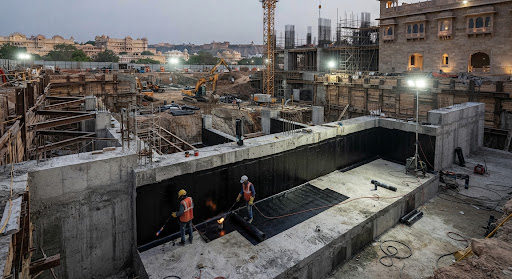
The ideal time: during construction
The best basement is a dry one from day one. During construction we install bentonite geocomposite or HDPE membranes on the external face, PVC waterstops at every construction joint, and crystalline admixture inside the concrete itself. This belt-and-braces system costs the least and protects the full lifecycle of the building.
This stage matters because once the structure is backfilled and the slab is cast, the exterior face is unreachable.
The retrofit: negative-side systems
For existing basements, we work from the inside using negative-side waterproofing. Crystalline slurry applied to the interior face reacts with moisture to grow non-soluble crystals inside the concrete's pores, blocking water under hydrostatic pressure.
Active cracks are pressure-injected with expanding PU foam, and a cementitious tanking coat ties the whole surface together. This approach routinely resolves seepage that has plagued homes for years.
Signs you need basement waterproofing now
Watch for damp patches that appear after rain, a musty smell, efflorescence on walls, warping storage, or water droplets on pipes. Left untreated, hydrostatic pressure will widen cracks and accelerate reinforcement corrosion—transforming a repair into a structural emergency.
Our free inspection uses moisture meters and thermal cameras to map the full extent before recommending a solution.
Need this done?